Upcoming Tours
One tour running now. More launching soon. Expeditions in the works. Here's everything on the frontier. Crestone sits 30 miles north of Great Sand Dunes National Park — the same valley, the same mountains, and a completely different kind of mystery.
45–60 min
Duration
2–12
Group Size
Easy
Difficulty
The Crestone
Walking Tour
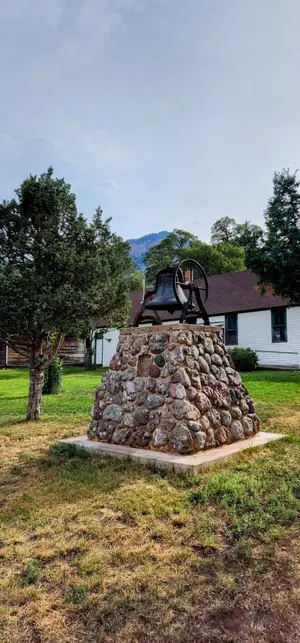
Crestone holds more layers of history, mystery, and unexplained phenomena per square mile than almost anywhere in Colorado. This walking tour is the full picture — from the town's spiritual sanctuary status, to its hard-labor mining past, to the UAP sightings that locals have been quietly documenting for decades.
What We Cover
Spiritual History
Sacred sites, sanctuary communities, and Crestone's role as a global spiritual center
Mining History
Silver and gold rush era sites, boom-and-bust stories, and the people who built this town
UFOs & UAP
The San Luis Valley's documented history as one of North America's most active UAP corridors
Paranormal Activity
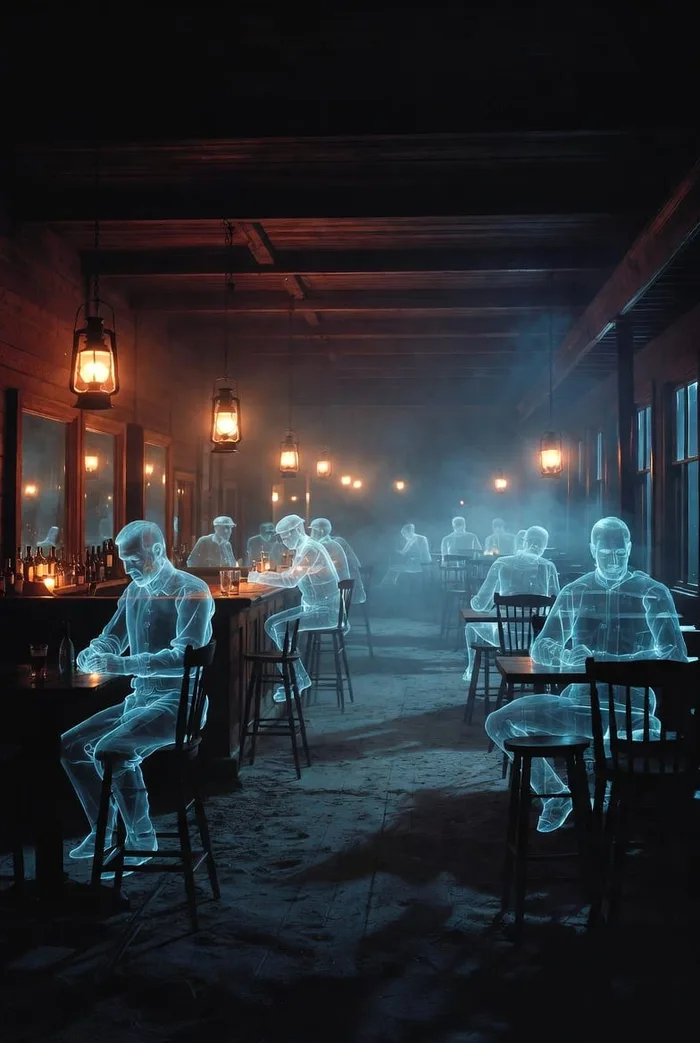
Documented unexplained events, local accounts, and the Valley's high-strangeness reputation
Town History
The full arc of Crestone — from its Indigenous roots to its eccentric present
Specialty Walking Tours
Dedicated single-topic tours for people who want to go deep. Each one builds on the original tour with a focused lens.

Future Expeditions
These aren't walking tours. These are multi-day field operations for people who are serious about what's out there. They're in development — join the waitlist to shape how they're built.
The map is real. The gold may be too.
Dead Man's
Treasure
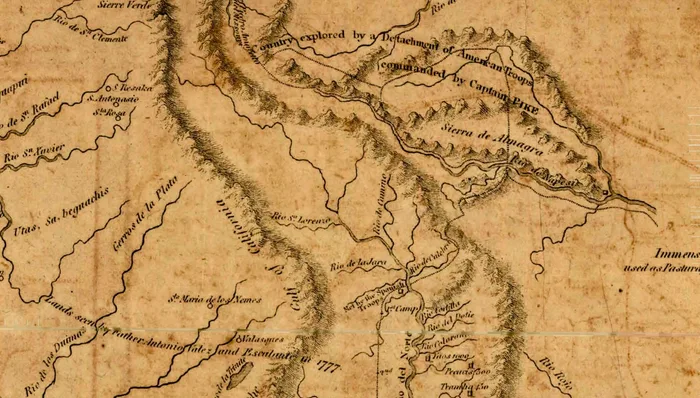
In 1719, Spanish colonial governor Antonio Valverde y Cosío led a military expedition deep into the Sangre de Cristo range — the mountains whose very name, Blood of Christ, was given by missionaries who watched the setting sun turn the peaks a deep, violent red. What they were looking for, the official reports never quite say. The San Luis Valley sits at the center of documented Spanish colonial treasure routes stretching north from the silver mines of Chihuahua and Santa Fe. Multiple independent accounts — oral traditions, court records, surveyor field notes — converge on the same terrain: the foothills east of Crestone, where the flatland meets the mountains and the old Spanish trail systems vanish into wilderness.
Field Footage
Legend I
Spanish Cave — La Caverna del Oro
At 13,266 ft, Marble Mountain sits southeast of the Crestone Peak and Crestone Needle group in the Sangre de Cristo range. Inside it is a cave known officially as Spanish Cave — also called La Caverna del Oro and Marble Mountain Cave. Its entrance sits between 11,500 and 12,100 feet elevation, making it the highest elevation significant cave in the United States. The passages run over a mile and descend more than 700 feet — the deepest cave in Colorado. A snowdrift blocks the entrance for most of the year and doesn't fully melt until August, leaving a window of roughly one month when entry is physically possible. Ropes and climbing gear are required throughout. It is considered the most objectively dangerous cave in Colorado.
In 1541, Spanish monks traveling with the Coronado expedition used Native American slave labor to extract gold from this cave. The operation was real enough to leave a name that has persisted for nearly 500 years. Around 1900, explorer Elisha Horn entered the cave and found a skeleton in Spanish armor with an arrow through its back. At the cave entrance, he documented a red cross painted on the rock — still faintly visible today.
In 1932, a separate expedition pushed deeper into the cave and found a second skeleton — chained by the neck to the wall. No explanation has ever been established for who it was, how it got there, or what it was guarding. The cave has been explored in pieces over the decades but has never been fully surveyed. What's in the deeper passages is still unknown.
Documented · October 1880
Dead Man's Cave
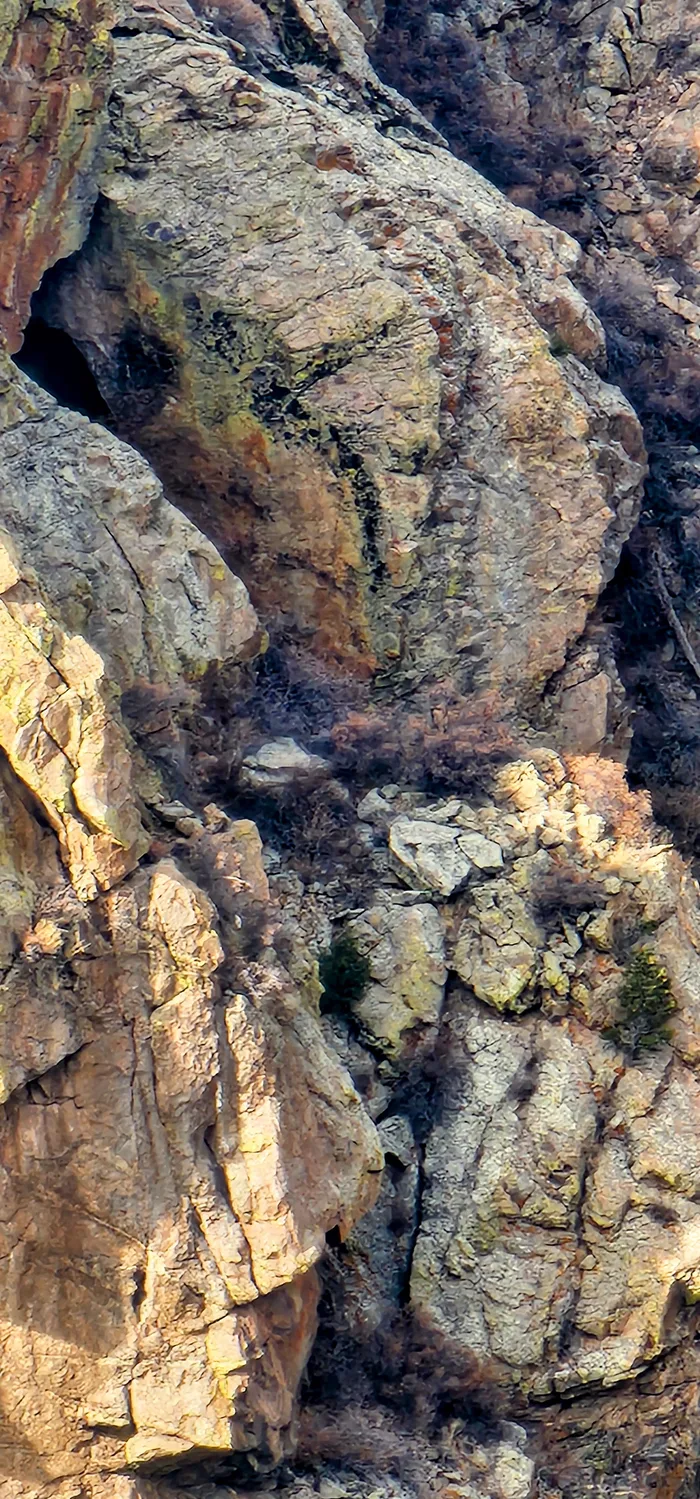
October 1880. Three prospectors from Silver Cliff — E.J. Oliver, S.J. Harkman, and H.A. Melton — were working the Sangre de Cristo range two miles north of what would become Dead Man Camp when a blizzard closed in. Across the canyon, Oliver spotted a small opening in a sheer rock wall. They crossed, found the gap barely four feet high, and crawled through into a large chamber roughly twenty feet across.
Oliver kicked something in the dark. He lowered his torch. It was a human skull. Scattered across the cave floor were five skeletons. That is how the place got its name — Dead Man's Cave. The three men pushed deeper, working through tight passages until they broke into a second chamber. On the western wall, shelves had been carved directly into the rock. Sitting on those shelves, covered in dust, were 400 gold bars. Each one was stamped with a Spanish cross and an inverted caret — colonial mint marks from centuries earlier.
They carried out five bars, hiked over the pass to Silver Cliff, and had them assayed. $900 per bar. The three men became local celebrities overnight. They refused to say where the cave was. When they went back to find it, they couldn't.
400 bars × $900 = $360,000 in 1880 — equivalent to approximately $30–50 million today, depending on how gold prices are applied. The 395 bars that stayed in the cave have never been accounted for.
The account was documented in The Fairplay Flume and The Denver Post in 1880 — making it one of the most credibly sourced treasure legends in Colorado history.
Historical Evidence
The Rastras
The most tangible evidence of pre-American Spanish mining activity in the region comes from the ground itself. Rastras — heavy circular grinding stones used to crush ore in colonial-era mills — have been found at several sites in the Sangre de Cristo foothills near Crestone. These are not trail markers or decorative objects. They are industrial equipment. Their presence indicates sustained ore-processing operations, not a single expedition passing through. Spanish colonial miners did not haul rastras into remote mountain terrain unless they had a reason to stay. The known find locations cluster in a way that suggests a pattern — one we have been mapping against the routes marked on the document above.
Expedition Status
The Slope No One Has Mapped
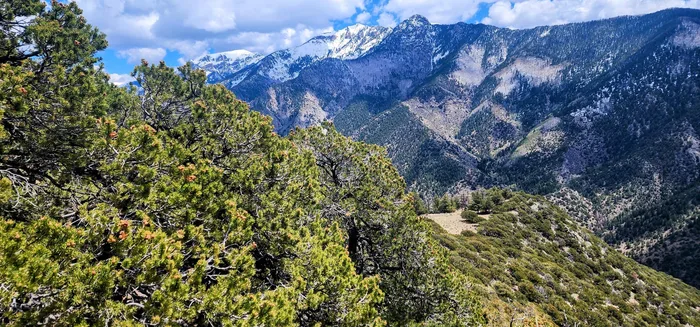
Two years of research — historical accounts, Spanish mission records, colonial trail mapping, rastra locations, and LiDAR analysis of the surrounding terrain — have pointed us to a specific face of the Sangre de Cristo range. The topography matches. The evidence of past mining activity in the area is consistent with what the historical accounts describe. We believe we've identified the general slope.
Here's what makes this different from every other treasure search in the valley: the specific slope we're targeting has no LiDAR data available. The coverage simply doesn't exist for this section of terrain. We don't know why. We're working entirely from old pathways and historical routes that still need to be physically located and cleared. The slope is massive, steep, and largely unexplored. That's exactly why nobody has found anything in 140 years — not because the gold isn't there, but because getting to it requires something most people aren't willing to do.
Be clear on what this expedition involves: cutting through significant deadfall, navigating steep and technically demanding slopes, using fixed ropes on exposed sections, wearing helmets, and pushing through wilderness that hasn't seen regular human traffic in decades. There are no established trails to the target area. This is genuine frontier exploration — uncomfortable, demanding, and entirely uncharted.
Harkman, Melton, and Oliver carried out five bars and had them assayed. The find was verified and reported in the press. Then they went back — and couldn't find the cave. In 145 years, nobody else has found it either. The remaining 395 bars are still in there. We know the creek. We know the terrain. We're going. Come help us find it.
Expedition Brief
This is a real field research expedition. It is physically demanding, technically challenging, and genuinely uncharted. If you're looking for a guided tour, we have those. If you want to be part of something that has never been done — get on the list.
About the Expeditions
These are real field operations, not adventure tourism packages. Dates, routes, and logistics are determined by research readiness—not a calendar. Waitlist members will be consulted on format and will have first access to slots when they open.